Food Truck Equipment & Consumables List (With Costs)
Quick answer
A fully equipped food truck spends $15,000–$40,000 on equipment, depending on cuisine. The big-ticket items are the cooking centerpiece (pizza oven $8K–$25K, smoker $5K–$15K, espresso machine $5K–$15K), generator ($3K–$6K), and fire suppression system ($3K–$7K). Used equipment can cut these figures by 30–50%.
Whether you are building a truck from scratch or buying one already outfitted, knowing exactly what equipment and consumables you need — and what each costs — is the difference between a realistic budget and costly surprises. This food truck equipment and consumables list covers the one-time kitchen build plus the packaging, gloves, chemicals, propane, and fuel you will replenish every week. Equipment is typically 25-35% of your total startup cost, and the choices you make ripple through everything from your menu to whether you pass your health department inspection. At a glance, plan on $15,000-$40,000 for equipment and $300-$900 per week for consumables. For the bigger budget picture, start with our food truck startup costs guide, and model your own numbers with the startup cost calculator.
Food truck equipment cost summary
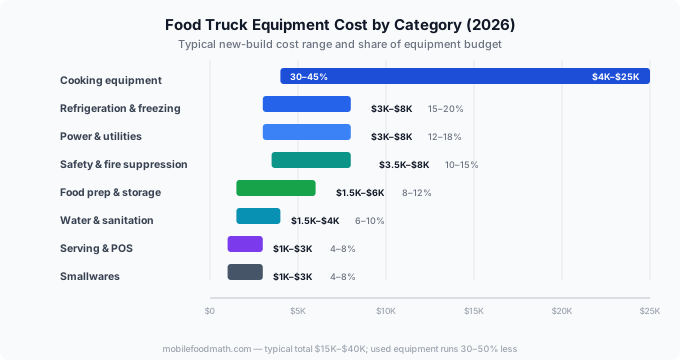
Before the line-by-line list, here is what the major categories typically cost for a new build using commercial-grade equipment. Used gear runs 30-50% less.
| Category | Typical Cost Range | Share of equipment budget |
|---|---|---|
| Cooking equipment | $4,000 – $25,000 | 30-45% |
| Refrigeration & freezing | $3,000 – $8,000 | 15-20% |
| Food prep & storage | $1,500 – $6,000 | 8-12% |
| Power & utilities (generator, electrical) | $3,000 – $8,000 | 12-18% |
| Water & sanitation (sinks, tanks, heater) | $1,500 – $4,000 | 6-10% |
| Safety & fire suppression | $3,500 – $8,000 | 10-15% |
| Serving & POS | $1,000 – $3,000 | 4-8% |
| Smallwares | $1,000 – $3,000 | 4-8% |
| Total equipment (typical) | $15,000 – $40,000 | 100% |
A lean coffee or dessert truck can land near the bottom of that range ($10K-$20K), while a BBQ or pizza concept with a major cooking centerpiece pushes toward $30K-$45K. The rest of this list breaks each category down item by item.
Cooking equipment
Your cooking line is the single largest equipment category and the one your menu dictates most directly. A taco truck and a pizza truck barely overlap here.
| Item | Purpose | Typical Cost Range |
|---|---|---|
| Flat-top griddle | Breakfast, tacos, burgers, smash patties, quesadillas | $2,000 – $5,000 |
| Charbroiler / grill | Grill marks on meat and vegetables | $1,500 – $4,000 |
| Deep fryer (countertop or floor) | Fries, chicken, fritters, sides | $1,000 – $3,000 |
| Range / burners | Sauces, soups, boiling, sautéing | $1,200 – $3,500 |
| Convection or pizza oven | Baking, roasting, pizzas (gas or wood-fired) | $2,000 – $25,000 |
| Commercial smoker | BBQ trucks; electric or wood-fired | $5,000 – $15,000 |
| Steam table / hot holding | Holds cooked food at safe serving temperature | $1,000 – $3,000 |
| Heated holding cabinet | Keeps proteins and tortillas warm | $1,000 – $2,000 |
| Espresso machine + grinder | Coffee trucks; pulls shots, grinds beans | $5,500 – $17,000 |
Long-tail angle — what cooking equipment a food truck actually needs: most general-menu trucks can open with just a griddle, a two-basket fryer, and a steam table, which keeps this category near $4,000-$8,000. Specialty concepts are where it climbs: a wood-fired pizza oven alone can be $8K-$25K, and a competition-grade smoker $5K-$15K. Buy your cooking centerpiece new or lightly used — worn cooking surfaces cost more in fuel and cleaning labor than the upfront savings.
Refrigeration and freezing
Cold storage is non-negotiable for food safety, and health inspectors will check that everything holds temperature. Right-size it to your menu so you’re not paying to power empty space.
| Item | Purpose | Typical Cost Range |
|---|---|---|
| Refrigerated prep table (sandwich/salad) | Cold rail for toppings plus cold storage below | $1,200 – $3,000 |
| Under-counter cooler | Ingredient and beverage storage at the line | $1,000 – $2,000 |
| Reach-in refrigerator | Bulk cold storage | $1,500 – $4,000 |
| Chest or upright freezer | Frozen proteins, fries, ice cream base | $1,000 – $3,000 |
| Ice machine or ice bin | Drinks, cold holding, food safety | $500 – $2,500 |
Long-tail angle — buying used refrigeration: a prep fridge from a restaurant liquidation can be a genuine steal at $500-$800, but always run it for a full 24 hours and confirm it holds 40°F before installing. Confirm the unit is NSF-listed; inspectors check the sticker. Avoid the cheapest residential-grade units — they struggle to hold temp in a hot truck and won’t pass inspection.
Food prep and storage
The unglamorous backbone of the kitchen. This is also the best category to buy used, since stainless steel doesn’t wear out.
| Item | Purpose | Typical Cost Range |
|---|---|---|
| Stainless prep tables | Cutting, assembly, plating surfaces | $500 – $2,000 |
| Wall and overhead shelving | Dry goods, smallware, supply storage | $300 – $1,000 |
| Cutting boards & racks | Food-safe prep surfaces (color-coded) | $100 – $400 |
| Food storage containers (Cambros) | Ingredient prep, labeling, FIFO rotation | $200 – $600 |
| Dry storage bins | Flour, rice, sugar, bulk dry goods | $150 – $500 |
| Sheet pans, hotel pans, inserts | Prepping, holding, transporting food | $300 – $800 |
Long-tail angle — where to save on a food truck build: prep tables and shelving are the safest used buys on the entire list. A restaurant going out of business will sell stainless tables for a third of retail. Spend the savings on cooking and refrigeration where reliability matters more.
Power and utilities
Nearly every truck runs on a generator, and undersizing it is one of the most common — and most expensive — build mistakes. Add up the running and startup watts of every appliance, then add 20-25% headroom.
| Item | Purpose | Typical Cost Range |
|---|---|---|
| Generator (quiet inverter) | Powers all electrical equipment off-grid | $3,000 – $6,000 |
| Electrical panel & wiring | Distributes power safely; required for inspection | $1,000 – $3,000 |
| Propane system (tanks, lines, regulator) | Fuels gas griddles, fryers, ovens | $500 – $1,500 |
| LED lighting | Work lighting and service-window visibility | $200 – $600 |
| Battery / shore power hookup | Run lights and POS without the generator | $300 – $1,000 |
Long-tail angle — what size generator a food truck needs: a basic taco or sandwich truck usually needs 4,000-6,000 running watts; a pizza truck with an electric oven or a coffee truck with a high-draw espresso machine often needs 6,000-8,000+ watts and a pure sine wave output to protect sensitive electronics. Generators are risky to buy used — hours and maintenance history are usually unknown — so budget $3K-$6K for a new quiet inverter model. We break the math down in the food truck generator cost guide.
Water and sanitation
This is where health codes are most prescriptive. Most U.S. jurisdictions require a specific sink configuration and minimum tank capacities, and you will fail inspection without them.
| Item | Purpose | Typical Cost Range |
|---|---|---|
| Three-compartment sink | Wash, rinse, sanitize dishes (code-required) | $400 – $1,200 |
| Separate handwashing sink | Hand hygiene only (code-required) | $150 – $500 |
| Fresh water tank | Potable water supply (often 30-40+ gal required) | $200 – $600 |
| Grey water tank | Waste water; usually sized ~15% larger than fresh | $200 – $600 |
| Water pump | Pressurizes the system | $150 – $400 |
| Water heater | Hot water at sinks (code-required) | $300 – $900 |
Long-tail angle — what plumbing health codes require: almost every health department mandates a three-compartment sink for warewashing plus a separate dedicated handwashing sink with hot and cold running water. Many require minimum fresh water capacity (commonly 30-42 gallons) and a grey water tank sized larger than the fresh tank so you can’t legally dump more than you carried. Check your local code before buying tanks — sizing rules vary by county. If you prep at a shared kitchen, some of these requirements shift; see our commissary costs guide for what the commissary covers versus what your truck still needs onboard.
Safety and fire suppression
Required, inspected, and not optional anywhere you cook with grease or open flame. This is also a category where buying new and getting the warranty is almost always the right call.
| Item | Purpose | Typical Cost Range |
|---|---|---|
| Type 1 ventilation hood | Captures grease-laden vapor over cooking (code-required) | $2,000 – $5,000 |
| Automatic fire suppression (Ansul-type) | Auto-extinguishes a cooking fire (code-required) | $3,000 – $7,000 |
| Class K fire extinguisher | Manual backup for grease fires | $150 – $400 |
| ABC fire extinguisher | General-purpose backup | $50 – $150 |
| Carbon monoxide / propane detector | Alerts to gas leaks | $50 – $200 |
| Anti-fatigue & non-slip mats | Crew safety on the line | $100 – $300 |
Long-tail angle — is a fire suppression system required: if you cook with a fryer, griddle, charbroiler, or open flame, the answer in nearly every U.S. jurisdiction is yes — a Type 1 hood with an automatic wet-chemical suppression system over the cooking line, professionally installed and certified. Coffee, ice cream, and cold-prep trucks can often skip it, which is a big reason their equipment budgets are smaller. Used systems can sometimes be recertified, but the $200-$500 saved rarely justifies the hassle. Full detail in the fire suppression system guide.
Serving and point of sale
The customer-facing equipment that turns finished food into revenue. Modest cost, high importance.
| Item | Purpose | Typical Cost Range |
|---|---|---|
| POS terminal (tablet + stand) | Order entry and transaction management | $300 – $1,000 |
| Card reader / payment terminal | Tap, chip, and swipe payments | $50 – $400 |
| POS software subscription | Menu, reporting, inventory (monthly) | $0 – $150/mo |
| Receipt printer | Printed receipts and kitchen tickets | $150 – $400 |
| Service window & shelf | Order handoff to customers | $200 – $800 |
| Menu board / signage | Displays menu and pricing | $100 – $600 |
Long-tail angle — leasing your POS: POS hardware is one of the few categories where leasing genuinely makes sense, often $50-$150/month bundled with software and a card reader. Cooking and refrigeration equipment, by contrast, rarely pencils out as a lease. Many processors will hand you a free or low-cost reader if you commit to their payment processing.
Smallwares
Individually cheap, collectively a real line item. New owners routinely underbudget this and end up making three supply runs in opening week.
| Item | Purpose | Typical Cost Range |
|---|---|---|
| Pots & pans | Cooking and sauce work | $200 – $600 |
| Knives & knife kit | Prep and butchery | $150 – $500 |
| Tongs, spatulas, ladles, turners | Line cooking and serving | $100 – $400 |
| Mixing bowls & prep utensils | Prep and assembly | $100 – $300 |
| Measuring tools & scales | Portion control and consistency | $50 – $250 |
| Cleaning supplies & racks | Sanitation and dish handling | $150 – $500 |
| Thermometers (probe + ambient) | Food safety verification | $50 – $200 |
Long-tail angle — a smallwares starter budget: plan on $1,000-$3,000 to fully outfit a truck’s smallwares, and buy a little extra of your highest-turnover tools (tongs, spatulas, probe thermometers) so a single bent or lost piece never stops service.
Consumables and recurring supplies
Equipment is a one-time spend; consumables are forever. This is the food truck consumables list most checklists forget — and it’s a real weekly operating cost, typically $300-$900 per week depending on volume.
| Consumable | Purpose | Typical Cost |
|---|---|---|
| Disposable containers, clamshells, boxes | Packaging finished food | $0.10 – $0.60 each |
| Cups, lids, straws | Beverages | $0.05 – $0.25 each |
| Napkins, utensils, condiment packets | Customer service | $0.02 – $0.15 each |
| Foil, deli paper, food film, bags | Wrapping and holding | $30 – $80 per case |
| Gloves (nitrile/vinyl) | Food handling (code-required) | $8 – $20 per box |
| Sanitizer & cleaning chemicals | Daily sanitation | $40 – $120 per week |
| Paper towels & dish towels | Cleaning and prep | $20 – $50 per week |
| Propane refills | Fueling cooking equipment | $20 – $60 per refill |
| Generator fuel (gas/diesel) | Powering the truck per service | $15 – $50 per day |
Long-tail angle — how much to budget for consumables: as a rule of thumb, packaging and paper goods run 3-6% of revenue, so a truck doing $4,000/week should expect roughly $120-$240/week in packaging alone, plus chemicals, gloves, and fuel on top. Buying packaging by the case from a restaurant supplier (rather than retail) is the single easiest way to protect this margin.
New vs. used, financing, and leasing
Most first-time owners build with a mix of new and used. The golden rule: buy used for things that sit still, buy new for things that generate heat or touch food. Stainless prep tables, shelving, and serving counters are excellent used buys. Fryers, griddles, ovens, generators, and fire suppression should be new or lightly used.
If your budget is tight, you have three main routes:
- Equipment loans — $5K-$150K at roughly 6-18% APR for qualified borrowers; good for big-ticket cooking equipment and generators.
- SBA microloans — up to $50K at lower rates (around 7-9%) but requiring more documentation, including a business plan.
- Leasing — works well for POS systems ($50-$150/month) and rarely makes sense for cooking gear.
The used restaurant equipment market — auctions, liquidators, and Facebook Marketplace — is the real money-saver, often 30-50% off retail. Expect to pay cash and haul it yourself, and always verify the NSF sticker, because inspectors will. A popular strategy: buy a truck that’s already partially equipped, then upgrade piece by piece as revenue grows, spreading the cost over 6-12 months instead of all at once.
See the Full Cost Picture
Equipment is just one part of your startup budget. Use our free calculator to see total costs including vehicle, permits, and working capital — built for taco, BBQ, pizza, coffee, and ice cream trucks.
Use the Startup Cost CalculatorEquipment needs by cuisine type
Your menu dictates your build-out, and choosing the wrong layout can cost $5K-$15K in retrofits later. Here is how equipment priorities shift by concept:
- Taco truck — griddle ($2K-$5K), steam table ($1K-$3K), heated holding cabinet ($1K-$2K), and multiple prep fridges for toppings. No fryer or oven needed unless you add specials.
- BBQ truck — the smoker is the big cost driver ($5K-$15K). Add a steam table for sides, a griddle for finishing, and extra ventilation. Overall equipment runs 20-30% higher than other concepts.
- Pizza truck — the oven ($8K-$25K) dominates the budget. Add a prep fridge with a large work surface, dough storage, and a generator sized for the oven’s power draw (5,000-8,000+ watts).
- Coffee truck — espresso machine ($5K-$15K) and grinder ($500-$2K) are the core. Needs a pure sine wave generator. No hood or fire suppression in most jurisdictions, so total equipment cost is lower.
- Ice cream truck — minimal cooking equipment (no hood, no fire suppression), but $1K-$3K for commercial freezers and a generator that runs all day to keep them cold.
Frequently asked questions
How much does food truck equipment cost in total?
A fully equipped food truck typically spends $15,000 to $40,000 on equipment depending on cuisine type. A coffee truck needs roughly $10K-$20K, a BBQ truck $15K-$30K, and a pizza truck $12K-$35K. Used equipment can cut these figures by 30-50%.
What is the most expensive piece of food truck equipment?
The cooking centerpiece is usually the most expensive item. Pizza ovens run $8K-$25K, commercial smokers $5K-$15K, and espresso machines $5K-$15K. After cooking equipment, a generator ($3K-$6K) and fire suppression ($3K-$7K) are the next biggest line items.
What equipment does a food truck legally need?
Health departments generally require a separate handwashing sink with hot and cold water, a three-compartment sink for warewashing, NSF-listed commercial cooking and refrigeration equipment, a Type 1 hood with automatic fire suppression over any grease-producing cooking, fresh and grey water tanks at code-minimum capacity, and at least one fire extinguisher (Class K for grease). Exact tank sizes and sink rules vary by county, so confirm locally.
Can I buy used food truck equipment?
Yes — most first-time owners buy at least some used. Good used buys are stainless prep tables, shelving, refrigerators (test for 24 hours first), and smallwares. Risky used buys are fryers, generators, and fire suppression systems, where unknown wear and certification requirements can erase the savings. Always confirm the NSF sticker.
Should I finance or lease food truck equipment?
Financing (an equipment loan or SBA microloan) is usually better for big-ticket items like generators and ovens. Leasing makes the most sense for POS systems, where $50-$150/month bundles hardware and software. For everything else, the used restaurant equipment market is typically the most budget-friendly path.
Methodology & Assumptions
Cost ranges are planning models assembled from the line items and assumptions shown in this guide. They are not quotes or guaranteed market averages. This page identifies 2 cited sources; official fees and requirements should be checked against those links. AI tools may assist with organization and drafting, but they are not a source and no independent food-truck operator review is claimed. Local rules and prices can change; verify them before committing funds. Last updated: 2026-09-06.
Sources & verification
- FDA — Food Code 2022 Model requirements for food equipment, warewashing, handwashing, and temperature control.
- NFPA — Food truck safety Fire and fuel-system safety guidance; local fire codes control.
Regulations and fees change. Confirm the current application, fee schedule, and operating rules with the issuing agency before purchasing a vehicle or signing a commissary agreement.